
Get our weekly roundup of smart savings tips.



How to dispute a medical bill and actually win
Step-by-step process for disputing a medical bill that you actually win. The errors to look for, the laws on your side, and the templates that work.
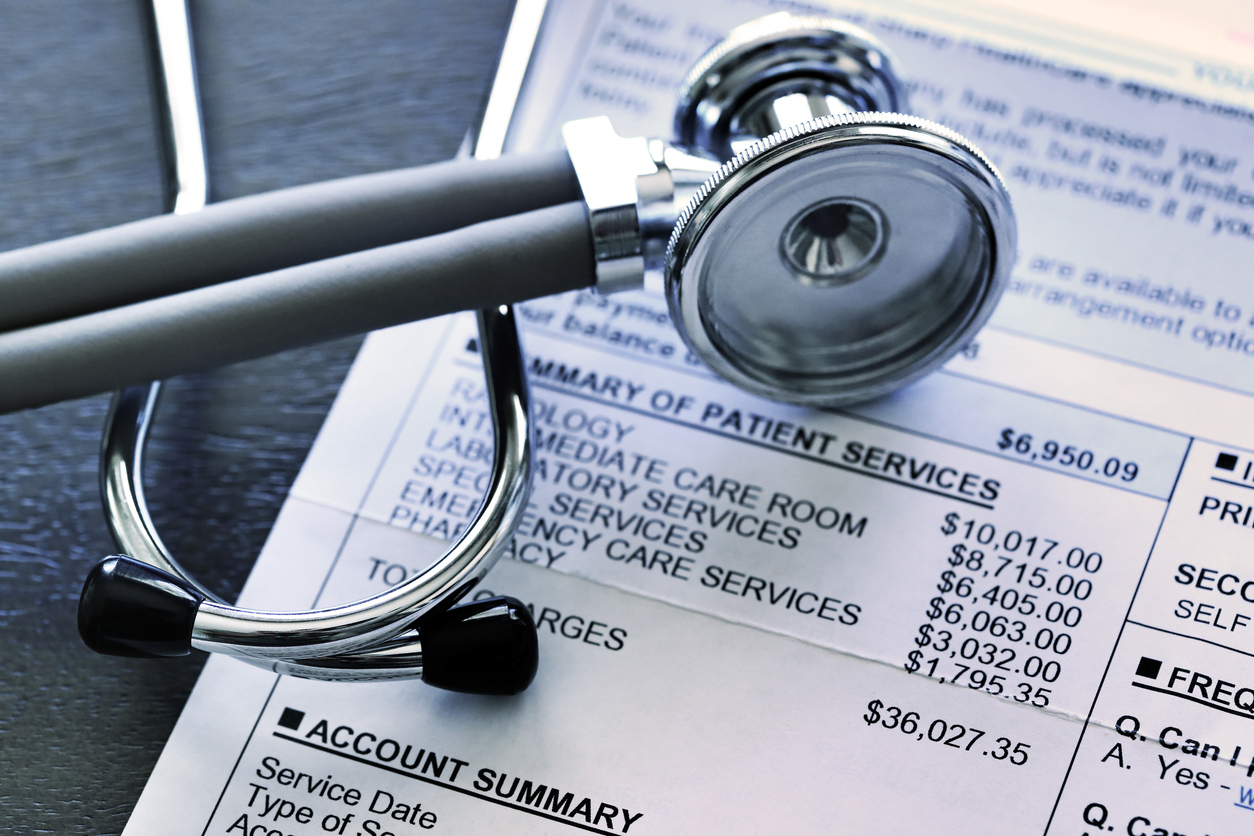
How to dispute a medical bill and actually win
Roughly 80 percent of medical bills contain errors. Most of the errors favor the provider. Here's the process for catching them and winning the dispute, written by people who've done it.
Medical billing is one of the few industries where the price you're charged has almost no relationship to the underlying cost. Two people in adjacent hospital rooms can be billed entirely different amounts for the same procedure depending on insurance, coding, and how the bill happened to be processed.
Studies consistently find that 50 to 80 percent of medical bills contain errors. Most of those errors favor the provider. The good news: the dispute process is straightforward if you know the steps.
Step 1: Request an itemized bill
The summary bill you get in the mail is not the real bill. It shows total amount owed but no line-by-line detail. The real bill is called an itemized bill and shows every charge, every billing code, and every service rendered. You have the right to it. Hospitals are legally required to provide one on request.
Call the billing department and request the itemized bill in writing. You should get it within 30 days. If they tell you the summary is all that's available, escalate to a supervisor. Itemized bills exist for every patient.
Step 2: Compare line by line
Now the work begins. Read every line. Check for:
Charges for things that didn't happen
Got billed for medications you didn't receive. Charged for diagnostic tests that never ran. Billed for an overnight stay when you went home the same day. These happen more often than people think because hospital billing is often automatic from initial orders that were later canceled.
Duplicate charges
The same service billed twice. Twin medications under different codes. Lab work billed both individually and as part of a panel.
Incorrect codes
Medical billing uses standardized codes (CPT codes for procedures, ICD-10 for diagnoses). A wrong code can make a routine visit look like a complex one, doubling or tripling the bill. You can look up CPT codes online to verify the description matches what actually happened.
Out-of-network charges that should be in-network
This is the most common issue post-2022. Anesthesiologists, radiologists, and pathologists are often out-of-network even at in-network hospitals. Under the No Surprises Act, you're protected from most of these surprise charges.
Step 3: Check insurance processing
If you have insurance, compare the bill against the Explanation of Benefits (EOB) your insurer sent. The bill should show what the insurer paid, what they applied to your deductible, and what they passed to you as your responsibility.
Look for: insurance didn't process the claim at all (sometimes the provider bills you while waiting for insurance). Insurance denied the claim for incorrect reasons. Network status was misapplied (the provider was listed as out-of-network when they shouldn't be). Procedure was coded in a way insurance didn't cover.
Step 4: Know your legal protections
The No Surprises Act
Since 2022, the No Surprises Act has protected patients from most surprise out-of-network bills for emergency care and for out-of-network providers at in-network facilities.1 If you received emergency care or got billed by an out-of-network anesthesiologist at an in-network hospital, the law caps what you can be charged at the in-network rate. Period.
If you got a surprise out-of-network bill after January 1, 2022, you can file a complaint with the federal No Surprises Help Desk at 1-800-985-3059. The complaint can force the provider to reduce the bill.
State balance billing laws
Many states have laws that go beyond federal protections. California, New York, Texas, Florida, Illinois, and others have strong balance billing protections. Check your state's insurance department website for what applies to you.
HIPAA disclosure rights
Under HIPAA, you have the right to all your own medical records and billing details. Providers can charge a reasonable copying fee, but they cannot refuse to provide them.
Step 5: Negotiate the bill
Even when there are no clear errors, you can usually negotiate a medical bill down significantly. Three approaches work:
Ask for the cash price
Hospitals charge different rates depending on who's paying. Cash prices are often 30 to 50 percent lower than insurance-billed prices. Even if you have insurance, sometimes paying cash and getting reimbursed later costs less than the negotiated insurance rate.
Ask: "What's your cash discount rate for this bill?" Or: "What would Medicare pay for this same procedure?" The Medicare rate is often the floor of what's reasonable.
Set up a payment plan
Hospitals strongly prefer slow payment to no payment. Most will set up interest-free monthly payment plans for any patient who asks. Aim for 24 months of payments minimum, longer is better.
Apply for financial assistance
Every nonprofit hospital is legally required to have a financial assistance policy. The income thresholds vary, but many hospitals will reduce or eliminate bills for patients earning under 200 to 400 percent of the federal poverty level.
Ask explicitly: "What financial assistance programs does this hospital offer? I'd like to apply." The application takes about 30 minutes. If you qualify, the savings can be thousands.
Step 6: Use the dispute letter
When you find specific errors, write a formal dispute letter. Send it certified mail with return receipt. The letter should include:
Patient name, account number, date of service
Specific itemized charges being disputed and why
Copies of supporting documents (EOB, medical records, etc.)
Request for a corrected bill within 30 days
Statement that you reserve the right to file complaints with state insurance department, hospital regulators, and consumer protection agencies
Once the dispute is in writing, the hospital cannot send the bill to collections while it's pending. That's the major leverage. Without a written dispute, they can keep collecting. With one, they have to pause and respond.
Step 7: Escalate strategically
If the billing department won't budge, escalate up the chain:
First. The patient advocate or patient relations office at the hospital. Most have one. They have authority to override billing decisions.
Second. Your state attorney general's consumer protection division. They take medical billing complaints, and the threat of an investigation is often enough to resolve disputes.
Third. Your state insurance commissioner. Especially useful for disputes involving insurance denials, network issues, or balance billing.
Fourth. The Better Business Bureau. Hospitals care about their ratings, especially for the consumer-facing services.
Fifth. Social media. Hospital systems respond to public Twitter and Facebook posts. Don't lead with this, but it's effective when other channels fail.
Common winning disputes
The most consistently winnable categories:
Charges for services that didn't actually happen (medical records prove non-occurrence)
Duplicate billing (the proof is in the itemized bill itself)
Out-of-network charges at in-network facilities (No Surprises Act applies)
Coding errors that inflated the bill (CPT code descriptions don't match service)
Charges insurance should have processed but didn't
Less consistently winnable: "this seems too expensive." The legal system doesn't recognize "this seems too expensive" as a valid dispute. You need specific errors or specific protections.
When to hire help
For bills over $10,000 with complex disputes, consider hiring a medical billing advocate. They charge 25 to 35 percent of savings, and they work the system full-time. Good ones can reduce a $50,000 bill to $15,000 in a few weeks.
The National Association of Healthcare Advocacy lists certified advocates. The Patient Advocate Foundation also provides free help for serious financial hardship cases.
What to do next
If you have any unpaid medical bill right now, request the itemized version this week. Read it. Highlight anything that doesn't match your memory of what happened or what your insurance said it would cover.
Send a dispute letter on the first error you find. The hospital is required to investigate. Half the time, the bill gets reduced just from the question being asked.
Sources
1. Centers for Medicare & Medicaid Services, No Surprises Act consumer information. cms.gov/nosurprises
2. Consumer Reports, How to Negotiate Your Medical Bills. consumerreports.org/medical-bills
3. Patient Advocate Foundation, Financial Assistance and Billing Resources. patientadvocate.org
4. Kaiser Family Foundation, Medical Debt Survey 2026. kff.org/medical-debt

Get our weekly roundup of smart savings tips.