Get our weekly roundup of smart savings tips.



River cruises vs ocean cruises: an honest comparison for travelers over 55
River cruises and ocean cruises look similar on paper. They're completely different vacations. Here's which one fits, with real 2026 pricing.
River cruises vs ocean cruises: an honest comparison for travelers over 55
Both are called cruises. They share almost nothing else. River cruises are smaller, slower, more expensive, and structured around destinations. Ocean cruises are bigger floating resorts where the ship is the point. Here's how to pick.
If you ask twenty people whether they prefer river or ocean cruises, half will say they don't see a difference. The other half will explain at length why the difference is everything. Both groups are right, depending on what they want from a vacation.
Here's the actual comparison, without the marketing fog.
The ship: small vs huge
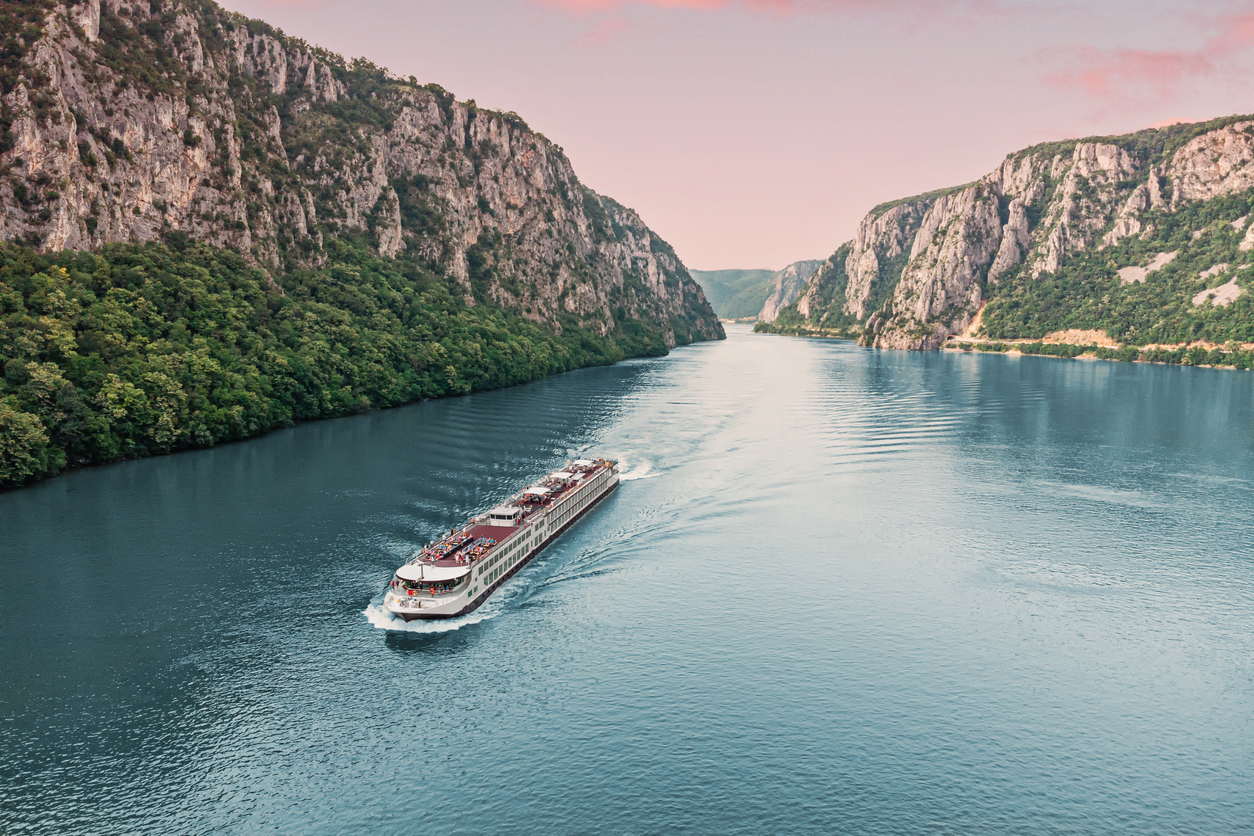
River cruise ships carry 100 to 200 passengers. They're long, low, and narrow (most are under 20 feet wide and 450 feet long) because they have to fit through European river locks. Cabins are small. Public spaces are limited to a dining room, a lounge, a small library, and a sun deck.
Ocean cruise ships carry 2,000 to 6,000 passengers. They're 1,000 feet long and 200 feet wide, with 15-plus decks, multiple restaurants, theaters, casinos, water parks, shopping arcades, and rock-climbing walls. Cabins range from inside cells to two-bedroom suites with butlers.
This single difference shapes everything else.
The pace: destination-driven vs ship-driven
River cruises stop somewhere new almost every day. The ship docks in the center of historic cities (Vienna, Budapest, Bordeaux, Strasbourg) and you walk off into the town. Excursions are usually included. The ship itself isn't the experience. The places are.
Ocean cruises stop somewhere new every two or three days. The ship is the experience. Multiple sea days, where you're at sea all day, are the norm on bigger itineraries. Excursions cost extra, often a lot extra ($150 to $400 per person). Most ports involve a tender ride or a long walk from a commercial pier.
The food: included vs upsold
River cruises bundle everything. All meals, all drinks (including wine and beer with lunch and dinner, often premium spirits), and most excursions are included in the fare. You unpack once. You barely use your wallet.
Ocean cruises bundle the basics. Standard dining, the buffet, room service, and tap water are included. Specialty restaurants, alcoholic drinks, soft drinks, premium coffee, shore excursions, gratuities, and Wi-Fi all cost extra. A couple with normal drinking habits can easily add $1,000 to a one-week cruise in extras.
The crowd: older and quieter vs all ages
Average river cruise passenger is in their 60s or 70s. Couples and small groups dominate. Kids are nearly absent. Dress code skews toward business casual. Evening entertainment is a local musician or a lecturer, not a Vegas show.
Ocean cruises run the full age range. Disney cruises lean heavily toward families with young kids. Royal Caribbean and Carnival skew younger. Holland America and Cunard skew older. Princess and Celebrity sit in the middle. Pick the cruise line, you pick the crowd.
The cost: surprising similarity
River cruises look expensive. A typical seven-night river cruise on the Rhine or Danube runs $3,500 to $5,500 per person in a standard cabin. Premium suites and longer itineraries can push past $10,000.
Ocean cruises look cheap. The same week on a Royal Caribbean Caribbean itinerary might be advertised at $700 per person in an inside cabin.
But once you add airfare and transfers, drink packages, shore excursions, gratuities, specialty dining, and Wi-Fi, the real cost of a typical mid-range ocean cruise often clears $2,500 to $3,500 per person. The gap closes. River cruises are still more expensive, but the difference is smaller than the headline numbers suggest.
Where each one wins
River cruise wins if you want
To see a lot of historic European cities in one trip
To unpack once and not deal with airports, taxis, or hotels
A predictable all-inclusive cost
Quiet evenings and a small-ship feel
Walking off the ship into the center of a real town
Ocean cruise wins if you want
A bigger ship with more on-board options
Caribbean, Mediterranean, or Alaska itineraries (rivers don't go there)
Multi-generational family travel
A lower headline price (with the awareness that extras add up)
Theater shows, casinos, and night life on board
The main river cruise companies in 2026
Viking is the dominant river cruise brand. They have the largest fleet, the most consistent product, and aggressive advertising. Their ships are tasteful, the food is good, and the demographics skew oldest of the major lines.
AmaWaterways is Viking's closest competitor. Smaller fleet, slightly younger demographic, more activity-oriented (they offer biking and hiking excursions). The food is generally considered the best in the category.
Uniworld is the most lavish. Cabins are bigger, public spaces are designed by Italian architects, and the food is fancier. Prices are about 20 percent above Viking.
Avalon Waterways and Scenic are the other two major players. Both are solid. Scenic skews more inclusive on excursions and drinks.
The main ocean cruise lines in 2026
Royal Caribbean and Carnival are the mass-market giants. The biggest ships, the lowest fares, the most options for families.
Norwegian, Celebrity, and Princess sit in the middle. Newer ships, slightly higher quality, slightly higher prices.
Holland America and Cunard are the traditional lines. Older average passenger, more formal evenings, fewer kids.
Disney is its own category. Excellent for grandparents traveling with grandkids. Expensive. The Disney-ness is either the appeal or the deal breaker.
Viking also runs ocean cruises now. Same all-inclusive model as their river product. No kids on board ever. The ocean ships are 900-passenger range, much smaller than the mass-market lines.
What to do next
Think about what you actually want from the vacation. If you want to see seven European cities in ten days without ever changing hotels, river cruise. If you want sea, sun, and a ship full of options, ocean cruise. If you want neither, a guided land tour might be the right answer.
If you've never tried either, river cruises are the lower-risk first experiment. The small-ship intimacy and included extras make for an easier trip. If it doesn't fit, you've learned something. If it does, you've found a kind of travel you might do for a decade.
Sources
1. Cruise Lines International Association, 2026 State of the Cruise Industry Report. cruising.org
2. Cruise Critic, River vs Ocean Cruise Comparison, 2026. cruisecritic.com
3. Viking Cruises, 2026 fare guide and itineraries. vikingcruises.com
4. AAA Travel, Cruise Trends Report 2026. newsroom.aaa.com

Get our weekly roundup of smart savings tips.