
Get our weekly roundup of smart savings tips.



Walk-in tubs: who they help, who they don't, and what they really cost
What walk-in tubs really cost in 2026, who they actually help, and the alternatives most contractors won't mention. No sales pitch.
Walk-in tubs: who they help, who they don't, and what they really cost
Walk-in tubs are heavily advertised to anyone over 60. They make sense for a specific kind of bather. For everyone else, a walk-in shower is cheaper, safer, and more practical. Here's how to tell which one you are.
If you've watched cable TV after 6 p.m., you've seen the ads. Walk-in tubs are sold with the urgency of a limited-time offer and the implication that anyone with creaky knees needs one. The reality is more specific. They're great for some people. They're a waste of money for many others.
Here's the honest breakdown.
What a walk-in tub actually is
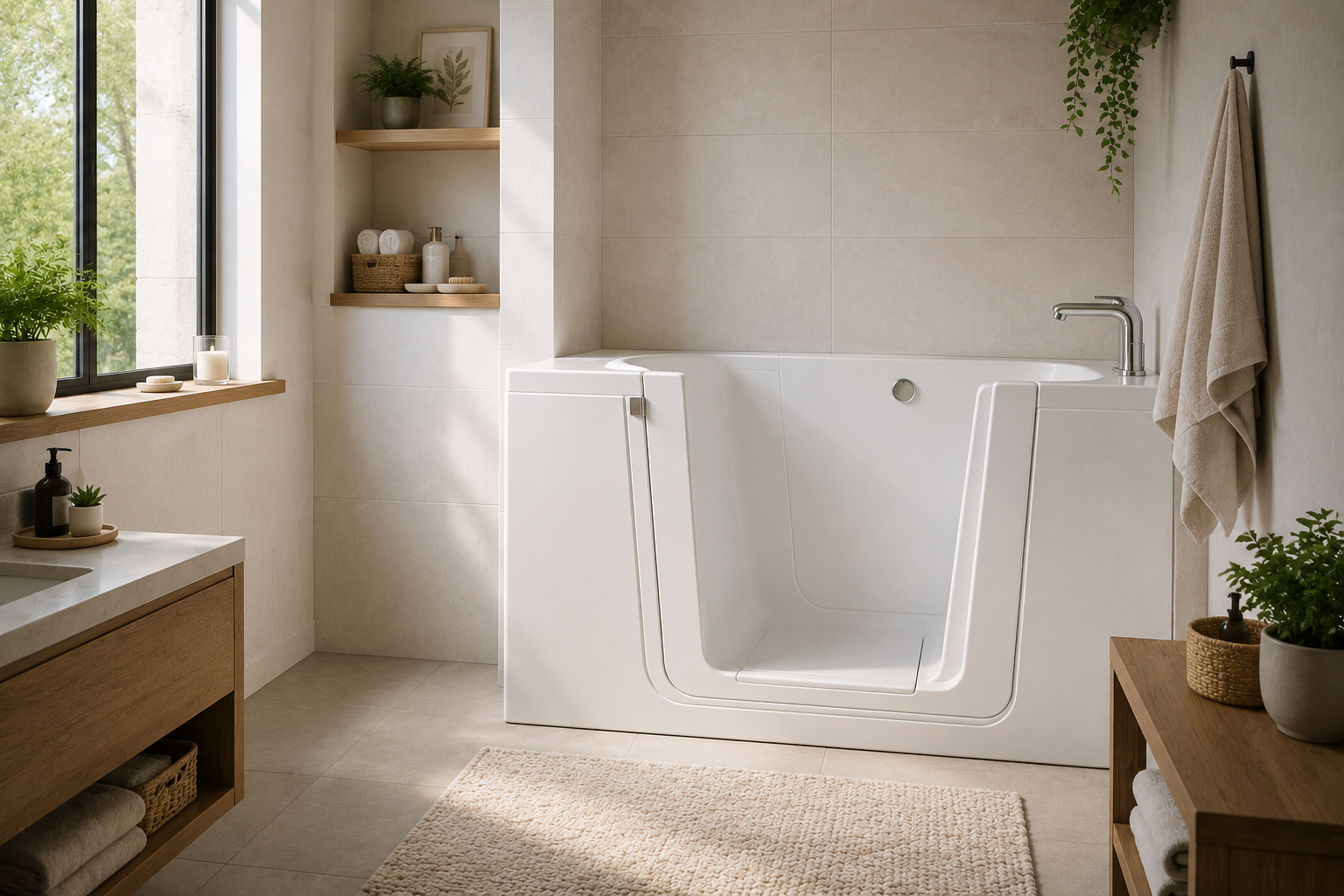
A walk-in tub has a watertight door on the side. You open the door, step in (no high tub wall to climb over), sit down on a built-in seat, close the door, and the tub fills around you. To get out, you drain the water and open the door.
Most modern walk-in tubs include features like grab bars, anti-slip floors, hand-held showerheads, and optional hydrotherapy jets. Premium models add heated seats, chromotherapy lighting, and aromatherapy. (The premium features are mostly upcharges with marginal benefit.)
The real cost in 2026
Walk-in tub costs range widely. A basic soaker tub installed starts around $3,000 to $5,000. A mid-range hydrotherapy model with installation lands between $9,000 and $15,000. A premium tub with all features can exceed $25,000.1
Installation specifically runs $1,500 to $3,200 for a straightforward swap. If your bathroom needs plumbing reconfiguration, electrical work for jets and heaters, or floor reinforcement (these tubs are heavy when filled), add another $2,000 to $5,000.
The headline number to expect for a real, livable walk-in tub: $10,000 to $15,000 all-in for most homeowners.
Medicare does not cover them
Walk-in tubs are not covered by Original Medicare. They're considered home modifications rather than durable medical equipment, which is the category Medicare reimburses for.2 Some Medicare Advantage plans now offer partial coverage as a home safety benefit, but it's plan-specific and rarely covers the full cost.
Medicaid coverage varies dramatically by state. In some states, walk-in tubs can be covered under home modification waivers for low-income recipients. In most states, they're not.
Veterans may qualify for partial coverage through VA grants (SAH or HISA). Worth checking the VA benefits website if you're a veteran.
For everyone else, expect to pay the full $10,000-plus out of pocket. Financing through the installer is available but the interest rates are high.
Who walk-in tubs actually help
Three specific situations where the math works:
First. You love bathing in a tub, you do it multiple times a week, and you specifically value soaking. If a hot bath is a meaningful part of your routine and getting in and out of a standard tub has become dangerous, a walk-in tub keeps that ritual safe. The hydrotherapy versions can genuinely help arthritis, sciatica, or chronic back pain.
Second. You have a medical condition that benefits from hydrotherapy and your doctor specifically recommends it. Some forms of rheumatoid arthritis, fibromyalgia, and recovery from certain orthopedic surgeries are areas where soaking jets help. The recommendation should be from your doctor, not the salesperson.
Third. You're in a home where a walk-in shower conversion isn't feasible (a one-bathroom house with no room to expand, an apartment, etc.) and you need to keep bathing accessible.
Who they don't help
Most people. Specifically, anyone who:
Already mostly takes showers. If you haven't soaked in a tub in five years, you're not going to start soaking now. A walk-in shower is the right modification.
Wants to age in place but isn't a heavy tub user. The walk-in shower is cheaper ($6,000 to $12,000 installed) and serves the same safety function with less complexity.
Is talking to a high-pressure salesperson who keeps emphasizing health benefits without engaging with your actual bathing habits. That's a sales tactic, not a recommendation.
Walk-in tub vs walk-in shower
Side by side, the comparison usually goes one way.
Cost: Walk-in tub $10K-$15K. Walk-in shower $6K-$12K.
Time to bathe: Tub requires 15+ minutes for fill, soak, drain. Shower takes 10 minutes total.
Safety: Both eliminate the step-over hazard. Showers eliminate the additional risk of waiting in a cold tub during fill/drain.
Maintenance: Tubs have more moving parts (jets, doors, seals). More can break.
Resale value: Walk-in showers add modest value or are neutral. Walk-in tubs can actively reduce resale value because they appeal to a narrow buyer pool.
For most people, the walk-in shower wins on every category that matters.
Three traps to avoid
First. The "free upgrade" trap. Most walk-in tub companies offer free upgrades to higher-tier models if you sign today. The base price was inflated to support the upgrade margin. Don't sign in the first conversation. Get two more quotes and the urgency disappears.
Second. The financing trap. In-house financing through the installer typically runs 12 to 25 percent APR over 10 to 15 years. A $12,000 tub financed at 18 percent for 10 years pays back over $26,000. If you don't have the cash, a home equity line of credit (HELOC) at 7 to 9 percent is dramatically cheaper.
Third. The medical-need trap. Some salespeople will tell you Medicare will reimburse if you get a doctor's letter. This is almost never true with Original Medicare. Get the reimbursement confirmation in writing, from your insurer, BEFORE signing the contract.
What to do next
Honest self-audit: how often did you take a tub bath in the last year? If the answer is fewer than ten, skip the walk-in tub. Get a walk-in shower instead.
If you genuinely soak regularly and a walk-in tub fits your bathing routine, get three quotes from different installers. Don't take the first salesperson at face value. The price you're quoted in conversation one is rarely the best price available.
Sources
1. ConsumerAffairs, How Much Do Walk-In Tubs Cost?, April 2026. consumeraffairs.com/homeowners/walk-in-tub-cost.html
2. Medicare.org, Will Medicare Cover a Walk-In Tub?, October 2025. medicare.org/articles/will-medicare-cover-a-walk-in-tub
3. Retirement Living, How Much Does A Walk-In Tub Cost? 2026 Guide, April 2026. retirementliving.com/best-walk-in-tubs
4. This Old House, Walk-In Tub Cost Guide 2026. thisoldhouse.com/bathrooms/walk-in-tub-cost

Get our weekly roundup of smart savings tips.