
Get our weekly roundup of smart savings tips.



The complete guide to selling your house without a realtor
Complete 2026 guide to selling your house without a realtor. Save 2.5 to 3 percent commission. Pricing, MLS, paperwork, and what to expect.
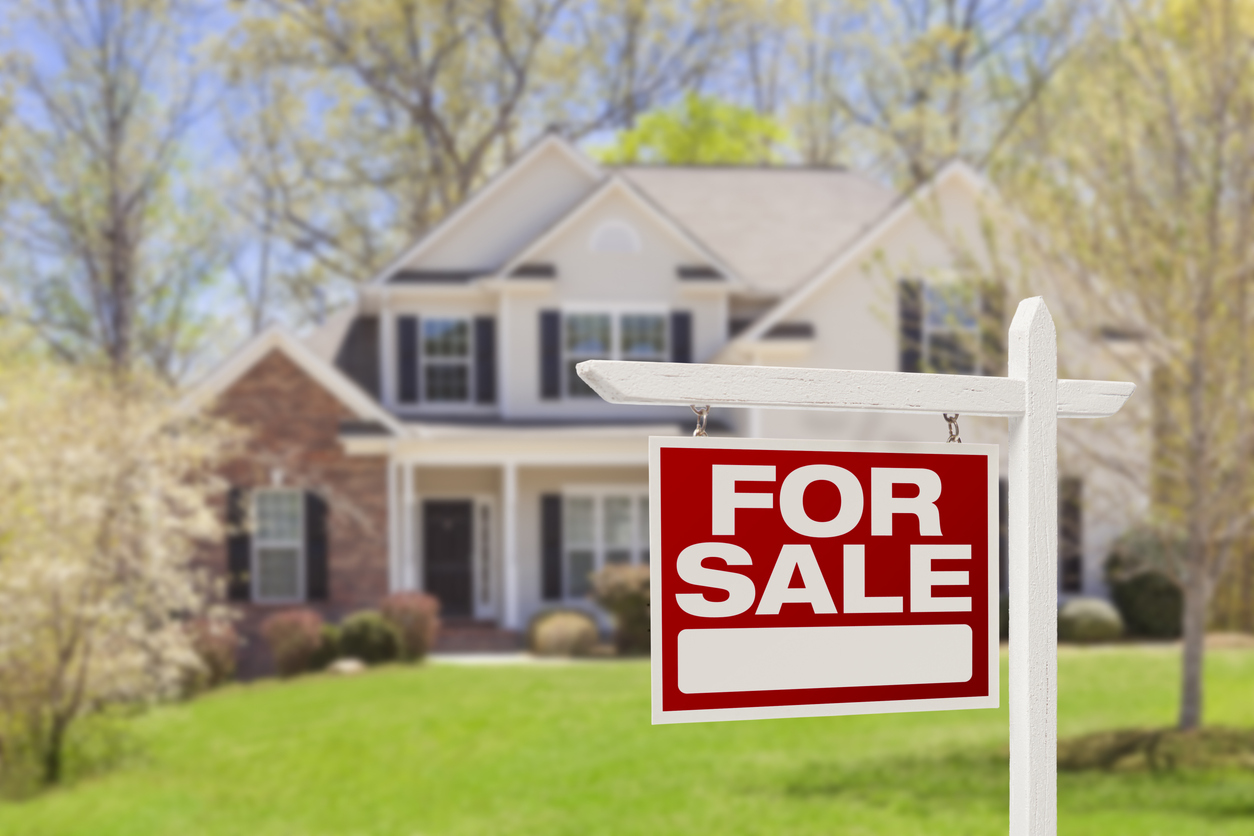
The complete guide to selling your house without a realtor
Selling without a realtor (FSBO) can save tens of thousands in commission, but only if you do it right. Here's the full 2026 playbook: pricing, MLS access, paperwork, and the traps to avoid.
Selling a house yourself is harder than selling an old car on Craigslist and easier than the real estate industry wants you to believe. The most common mistake people make isn't a legal one. It's pricing. Get the price right and the rest is paperwork. Get it wrong and you'll sit on the market for months or leave money on the table.
Here's the full guide for 2026, with the post-2024-NAR-settlement updates that changed the math for everyone.
Why people sell FSBO
The standard listing agent commission in 2026 averages 2.88 percent of the sale price. Buyer's agent commission averages another 2.82 percent. On a $400,000 home, that's roughly $22,800 in total commissions.1 Selling FSBO can eliminate the listing agent fee entirely, and post-NAR settlement, you can sometimes negotiate down the buyer's agent fee too.
Realistic savings on a $400,000 home: $10,000 to $25,000 depending on whether you pay any buyer's agent commission. That's real money. It's also real work.
The 2024 NAR settlement changed everything
Until 2024, listing agreements through the MLS were required to offer buyer's agent commission. Sellers couldn't really refuse, because doing so reduced exposure. The August 2024 National Association of Realtors settlement removed that requirement. As a seller, you can now decide independently whether to offer a buyer's agent commission and how much.
This matters for FSBO sellers. In the old world, even if you saved the listing agent fee, you usually still paid the buyer's agent 2.5 to 3 percent. In the new world, you have options. You can offer zero, a flat fee, or a reduced percentage. Buyers might bring their own agent and negotiate that fee themselves, separate from your sale.
The honest tradeoff: FSBO sells for less
Homes sold FSBO historically sell for less than agent-listed homes. NAR's data shows a meaningful gap, sometimes $30,000 or more on median home values.2 Most of that gap is explained by exposure: FSBO homes that don't get on the MLS miss the buyers searching there.
The fix is straightforward. Pay $200 to $500 for a flat-fee MLS service that puts your home on the local MLS. That gets you the same exposure as an agent-listed home for a tiny fraction of the cost. After that, the FSBO discount mostly disappears for sellers who price correctly.
Step 1: Price the house right
This is the single most important step. Overprice and you sit on the market while the listing gets stale. Underprice and you leave money on the table. The right price is within 1 to 2 percent of fair market value.
Three ways to figure that out:
Pull comparable sales from your county assessor's website (free, public record)
Check Zillow's Zestimate and Redfin's Estimate (free, decent ballpark, often 5 percent off either way)
Hire a licensed appraiser for $400 to $600 (most accurate, sometimes worth it for an expensive or unusual home)
The most reliable approach: look at three to five homes within a half-mile that sold in the last six months and are similar in size, age, and condition. Adjust up or down for differences. The price your home should sell at is the median of those adjustments.
Common FSBO trap: emotional pricing. The house you raised your kids in is worth more to you than the market. Comparable sales are the unsentimental answer.
Step 2: Prep the house for sale
Three priorities, in order:
Declutter and deep clean. Empty 50 percent of the closets. Remove personal photos and clutter. Hire professional cleaners ($200 to $500) the week before listing. Houses sell on first impressions, and clutter masks the actual square footage in photos.
Fix the obvious. Broken doorknobs, cracked outlet covers, leaky faucets, scuffed paint. Spend a weekend with a $200 trip to Home Depot fixing the small stuff. Each tiny issue plants a seed of doubt in buyers' minds. Together they make the whole house feel neglected.
Stage the key rooms. The living room, the master bedroom, and the kitchen are the rooms buyers focus on most. Move furniture to make rooms feel larger. Add a few simple touches (fresh flowers, a coffee setup on the kitchen counter, neutral throw pillows). Professional staging companies charge $500 to $1,500 a month. For most homes, DIY staging is fine.
Step 3: Hire a professional photographer
This is non-negotiable. Phone photos kill listings. A professional real estate photographer charges $200 to $500 for a full shoot of an average home, and the difference shows up in click-through rates immediately.
Listings with professional photography sell 32 percent faster and for thousands more on average than listings with amateur photos.3 The ROI is one of the clearest in real estate.
Schedule the shoot for a sunny day, mid-morning or late afternoon. Have the house immaculate before the photographer arrives. Provide a shot list of the rooms you want featured.
Step 4: List on the MLS
Get a flat-fee MLS listing. This is the most important purchase decision for FSBO sellers. Services like Houzeo, Beycome, Flat Fee MLS, and ListWithFreedom upload your listing to the local MLS for a one-time fee of $100 to $500.
Once on the MLS, your listing automatically syndicates to Zillow, Realtor.com, Redfin, and most other major real estate sites. Buyer's agents see it in their MLS searches. You've effectively gotten the same exposure as an agent listing for under $500.
Without the MLS, you're relying on Zillow's FSBO category, Facebook Marketplace, and yard signs. That works for some markets but limits your buyer pool dramatically. Don't skip the MLS.
Step 5: Market beyond the MLS
Even with MLS exposure, additional marketing helps. The high-ROI add-ons:
Yard sign with a clear phone number ($30 to $60)
Facebook Marketplace post with the photos and price ($0)
Posts to local neighborhood Facebook groups and Nextdoor ($0)
A boosted Facebook ad targeting buyers within 30 miles ($50 to $200)
Print flyers for nearby open houses or coffee shops ($30 to $50)
Skip: paid Zillow Premier Agent (designed for agents, not FSBOs). Yard signs from a chain service like FSBO.com (overpriced). Door-knocking the neighborhood (most homeowners find it intrusive).
Step 6: Handle showings
Decide upfront how you'll show the home. Two options:
By appointment only. You schedule showings, give a 30-minute window, and meet buyers at the house. Safer, more controlled, less efficient. Best for homes with valuables that can't easily be removed or sellers who want to qualify buyers directly.
Lockbox with electronic access. Agents can show the home without you present. More efficient, more exposure, requires more trust. Use a lockbox with electronic access (Supra or Sentrilock) that records every entry. Combine with a doorbell camera so you can see who's coming and going.
Safety: never show the home alone to a stranger. Always have someone else in the house or know to call you at a specific time. Ask buyers to provide name, contact info, and the agent they're working with before scheduling.
Step 7: Negotiate the offer
Standard residential offers come on a state-specific Residential Purchase Agreement form. Most are 8 to 12 pages. The terms that matter most:
Price
Earnest money deposit (typically 1 to 3 percent of price)
Financing contingency (deadline for buyer to secure loan)
Inspection contingency (deadline for buyer to inspect and request repairs)
Appraisal contingency (if appraisal comes in low, buyer can back out)
Closing date
Buyer's agent commission (if any)
Counter the price first. Then handle contingency deadlines (shorter is better for you). Then close on the date that works for both sides.
Don't accept the first offer reflexively. A buyer who likes the house is usually willing to come up 1 to 3 percent. The negotiation is the smallest part of the work and the biggest part of the savings.
Step 8: Hire an attorney for closing
This is the one professional you should hire. A real estate attorney charges $500 to $1,500 to review the contract, run the title check, handle the closing documents, and oversee the transaction. Worth every dollar.
In some states (New York, New Jersey, Massachusetts, Georgia, parts of Illinois), a real estate attorney is required by law. In others, a title company handles closing on its own. Either way, paying an attorney to review the paperwork is the cheapest insurance against post-closing legal trouble.
The full cost breakdown
On a $400,000 home, here's what FSBO actually costs vs. traditional agent.
ItemTraditional agentFSBOListing agent commission (2.88%)$11,520$0Buyer's agent commission (2.82%)$11,280$0 to $11,280Flat-fee MLS service$0$300Professional photos$0 (often)$400Real estate attorney$0 (usually)$800Total cost$22,800$1,500 to $12,780Net savings—$10,000 to $21,300
Five things you can't outsource
First. Scheduling and being available. Showings happen on the buyer's schedule, often evenings and weekends. If you're traveling or working long hours, FSBO is harder.
Second. Negotiating directly with buyers and their agents. Some people enjoy this. Some hate it. If you hate it, the savings might not be worth the stress.
Third. Reading contracts carefully. The Residential Purchase Agreement is dense. You need to understand what you're agreeing to. The attorney helps, but the seller still needs to grasp the fundamentals.
Fourth. Disclosure requirements. Most states require sellers to disclose known defects (water damage history, lead paint in older homes, environmental hazards, etc.). Failing to disclose can lead to post-closing lawsuits. Get the state disclosure form right.
Fifth. Handling the emotional weight. The first showing where someone says they're not interested feels personal even when it isn't. Some sellers find this harder than the logistics.
When to hire a discount or flat-fee agent instead
If pure FSBO sounds like too much work, several alternatives bridge the gap.
Flat-fee full-service agents charge $3,000 to $5,000 total instead of a percentage. The agent handles everything but you pay a fixed amount. Best for higher-value homes ($600,000-plus) where the percentage commission would be substantial.
Discount listing agents charge 1 to 1.5 percent instead of the usual 2.5 to 3 percent. You get most of the service of a traditional agent at half the commission. Companies like Clever, Redfin, and Ideal Agent offer this model.
The pure FSBO route has the biggest savings but the most work. The discount agent route has smaller savings and much less work. Pick based on your time and your tolerance for the process.
What to do next
Pull up your county assessor website and look at three to five recent sales near you. Get a baseline price expectation. Then decide whether you want to do this yourself, hire a flat-fee MLS service and a discount agent for parts of it, or hire a traditional agent.
If you decide on FSBO, the first three weeks are the heaviest workload: pricing, prep, photography, and listing. After that, it's responding to showing requests and waiting. Most FSBO sales close within 60 to 90 days when the price and prep are right.
Sources
1. Real Estate Witch, Who Pays Realtor Fees in 2026, May 2026. realestatewitch.com/realtor-fees-and-commissions
2. National Association of Realtors, 2024 Profile of Home Buyers and Sellers. nar.realtor/research-and-statistics
3. Opendoor, FSBO Guide 2026: Sell Without a Realtor & Save Thousands, May 2026. opendoor.com/articles/sell-your-house-without-a-realtor
4. ByOwner, How to Sell Your Home Without a Realtor: Complete FSBO Guide, April 2026. byowner.com/blog/sell-home-without-realtor

Get our weekly roundup of smart savings tips.