
Get our weekly roundup of smart savings tips.


GoodRx vs SingleCare vs Optum Perks: which prescription discount card saves you the most
Side-by-side comparison of GoodRx, SingleCare, and Optum Perks across ten common drugs. Which discount card actually saves you the most.
GoodRx vs SingleCare vs Optum Perks: which prescription discount card saves you the most
We compared the three biggest prescription discount programs across ten common medications. The headline: the same drug can vary by 60 percent depending on which card you flash at the pharmacy.
Prescription discount cards are one of the few corners of healthcare where the user is genuinely in control. You print a coupon, hand it to the pharmacist, and the price drops. No insurance involvement, no prior authorization, no annual deductible reset.
Three companies dominate this space: GoodRx, SingleCare, and Optum Perks. All three are free. All three work at most major pharmacies (CVS, Walgreens, Walmart, Kroger, Rite Aid). And all three quote wildly different prices on the same drug.
Here's what they actually do, how they make money, and which one wins for the drugs people fill most often.
How discount cards actually work
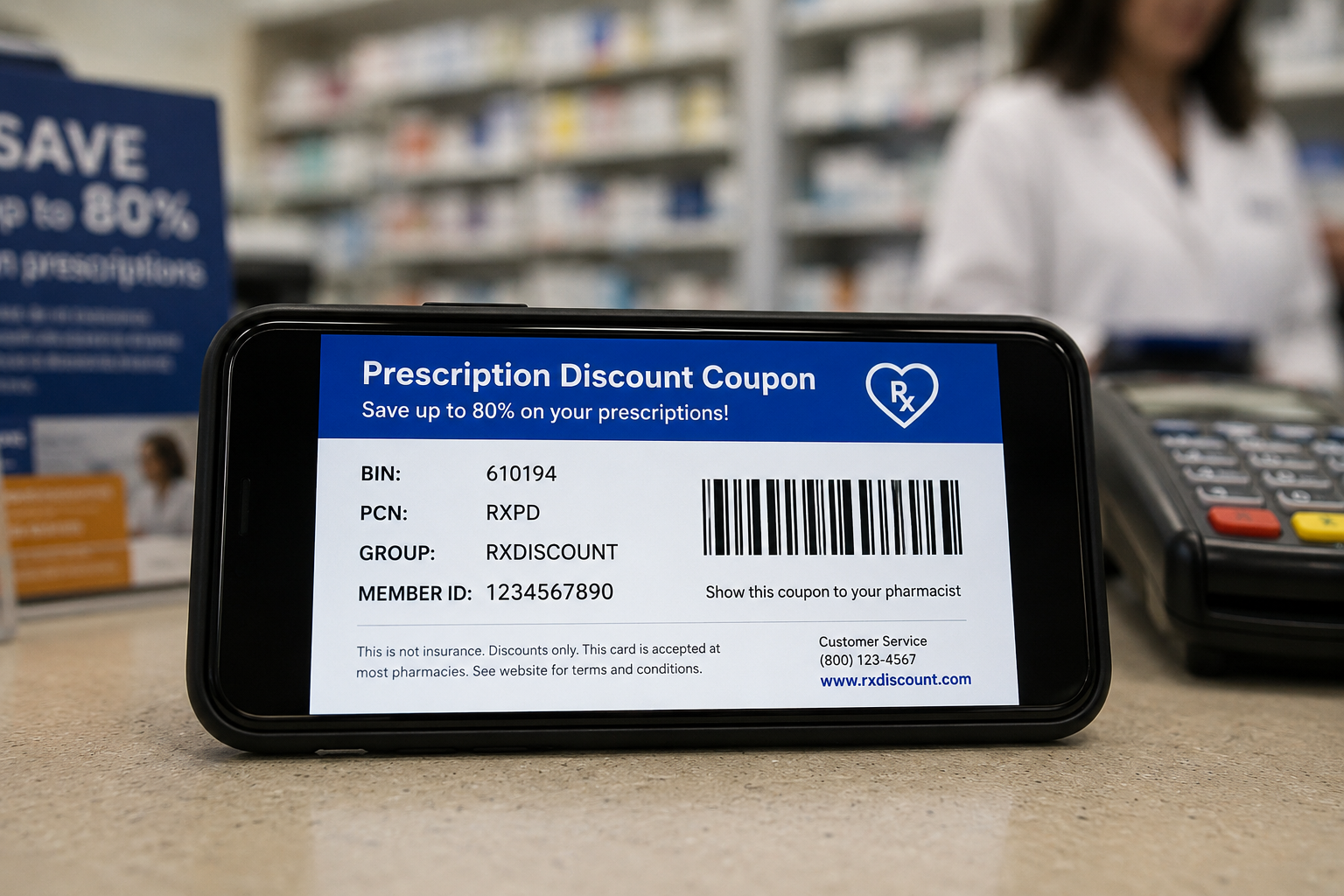
None of these companies are insurance. They are pharmacy benefit managers in lipstick. They negotiate group discounts with pharmacy chains, then let consumers use those discounted rates by printing or showing a coupon.
They make money on a small per-transaction fee paid by the pharmacy, plus advertising on their websites and apps. You pay nothing. The pharmacy gets a customer they might have lost to a competitor. Everyone profits except the drug manufacturer, who gets paid the same either way.
The catch is that you can't combine these cards with insurance. If your insurance copay is $12 and the GoodRx price is $9, you use GoodRx and skip insurance for that fill. Your insurance won't apply the cost to your deductible. For most generic medications, that tradeoff is worth it.
The three contenders
GoodRx
Founded in 2011, GoodRx is the dominant brand in the category. They have the largest user base, the most comprehensive drug database, and the most consistent pharmacy participation. Their app is the best of the three by a noticeable margin: clean interface, easy price comparison, and a useful pill identifier.
GoodRx also offers a paid tier called GoodRx Gold for $9.99 a month ($19.99 for families). Gold provides deeper discounts on a subset of drugs, mostly generics. Worth it only if you fill several maintenance medications every month.
SingleCare
SingleCare launched in 2014 and grew fast by undercutting GoodRx on key drugs. They have a smaller pharmacy network on the edges (some independent pharmacies don't accept them), but they cover all the major chains and are often the cheapest option for common antibiotics and pain medications.
SingleCare has no paid tier. Everything is free. Their app is functional but less polished than GoodRx.
Optum Perks
Optum Perks is owned by UnitedHealth Group, which also owns the pharmacy benefit manager OptumRx. That gives them direct pricing power that the smaller companies don't have. The result: Optum Perks is often the cheapest on brand-name drugs and on drugs where the manufacturer has a quiet arrangement with Optum.
The downside is that the website is the weakest of the three. Search results are buggy. Pharmacy filters sometimes don't work. The discounts are real, but finding them takes more effort.
The head-to-head test
We ran ten common prescriptions through all three sites for a single zip code in Dallas, Texas, at a CVS pharmacy. All prices reflect a 30-day supply unless noted. Prices change frequently; verify before you fill.
DrugGoodRxSingleCareOptum PerksAtorvastatin 20mg$8.50$6.41$7.85Lisinopril 20mg$5.20$4.18$4.95Metformin 500mg$4.10$3.55$3.92Amlodipine 5mg$6.30$5.10$6.05Levothyroxine 50mcg$7.45$5.80$7.20Omeprazole 20mg$9.20$8.10$8.65Amoxicillin 500mg (10 caps)$8.95$5.45$7.30Sertraline 50mg$8.20$6.95$7.60Albuterol inhaler$26.50$24.10$22.40Eliquis 5mg (brand)$565.00$574.00$548.00
SingleCare won 7 of 10 head-to-head matchups. Optum Perks won 2 (the inhaler and the brand-name blood thinner). GoodRx came in last on most generics, but their app remains the easiest to use, and the convenience of that matters more than people admit.
Which one to use, by situation
If you're new to discount cards: start with SingleCare
It wins on the most common medications, has no paid tier to confuse anyone, and the price gap on generics is real. The app is fine. The website works. You're not missing much by not using GoodRx.
If you fill several maintenance drugs: consider GoodRx Gold
Ten bucks a month sounds like a lot, but if you're filling four or five generics monthly, the deeper Gold discounts often clear the membership cost twice over. Track your costs for two months without Gold, then run the same drugs with Gold pricing visible. Math will tell you.
If you take brand-name medication: check Optum Perks first
Brand-name discounts are where Optum Perks earns its keep. For Eliquis, Xarelto, Ozempic, and other heavily marketed drugs, Optum's pricing arrangement frequently beats both competitors. Worth the extra two minutes of website friction.
Three rules for using any of them
First: check the price on all three before every fill. Loyalty makes no sense here. The drug you filled last month at SingleCare for $5.80 might be cheaper this month on Optum. It takes 90 seconds on a phone.
Second: ask the pharmacist to run the cash price too. Some pharmacies, particularly Costco and grocery store pharmacies, beat discount card prices on common generics. The pharmacist will tell you if you ask. They won't volunteer it.
Third: don't show a discount card if your insurance copay is already low. If your insurance copay for a generic is under $5, just use insurance. The savings on a discount card aren't worth losing the deductible credit.
What to do next
Pick your two or three most-filled prescriptions. Run each one through GoodRx, SingleCare, and Optum Perks for your zip code. Compare to what you currently pay. If any of the three beats your current price, save the coupon and use it next refill.
If you're on Medicare, also check the SilverScript and Wellcare Extra Help formularies through your Part D plan. Discount cards can't be combined with Medicare Part D, but in some cases the Part D copay is actually lower.
Sources
1. GoodRx, How GoodRx works and pricing methodology. goodrx.com/how-goodrx-works
2. SingleCare, Prescription discount program FAQ. singlecare.com/faq
3. Optum Perks, How prescription savings work. perks.optum.com/how-it-works
4. JAMA Internal Medicine, Comparison of Prescription Discount Card Prices, March 2022. jamanetwork.com

Get our weekly roundup of smart savings tips.