
Get our weekly roundup of smart savings tips.



iPhone vs Samsung: which phone actually fits your life
Honest 2026 comparison of iPhone 17 and Samsung Galaxy S26. Real differences in price, ease of use, photos, battery, and which fits which user.
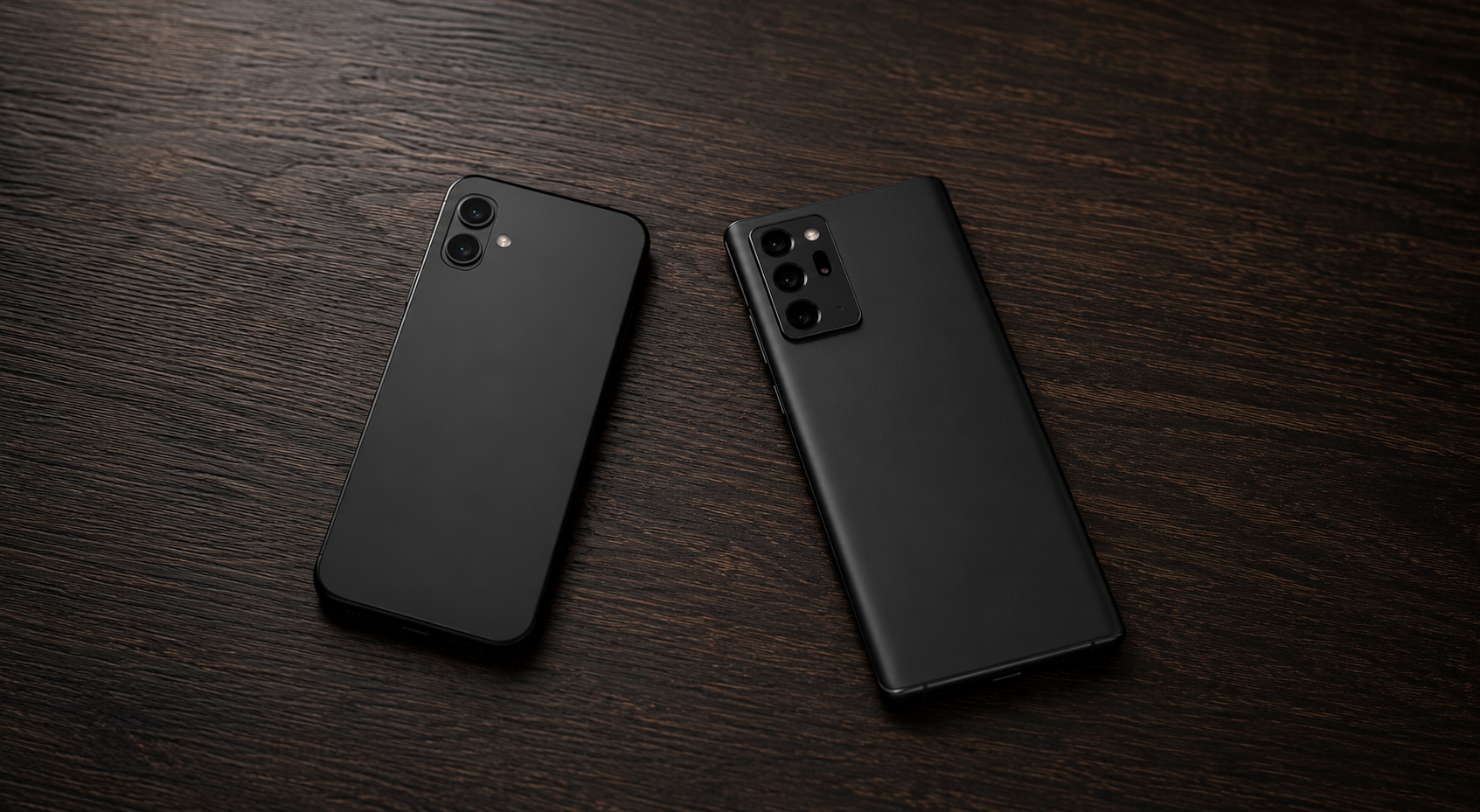
iPhone vs Samsung: which phone actually fits your life
iPhone 17 and Samsung Galaxy S26 are the flagship phones of 2026. They're more similar than ever. The differences that still matter are the ones the marketing doesn't focus on. Here's the comparison.
If you're buying a flagship phone in 2026, the choice is essentially between iPhone 17 and Samsung Galaxy S26. Every other Android phone is a variation on the Samsung approach. iPhone is its own ecosystem. The marketing makes the choice feel high-stakes. In reality, both phones do 95 percent of the same things equally well.
The differences that matter are subtle. Here's the honest comparison.
Price: where the gap is widening
iPhone 17 starts at $799 for the base 256GB model. iPhone 17 Pro Max starts at $1,200. Samsung Galaxy S26 starts at $899. S26+ starts at $1,100. S26 Ultra starts at $1,300.1
For the first time in several generations, the base iPhone is the cheaper flagship option in 2026. The gap is mostly because Samsung raised prices $100 across the S26 line.
That said, both companies have ongoing trade-in deals and carrier promotions. Real-world prices after trade-in often drop the cost of a flagship by $300 to $500. Always check trade-in value for your current phone before paying retail.
Ease of use: iPhone still leads, but the gap is small
Most older buyers find iPhones easier to learn for one specific reason: consistency. Every iPhone since the original works the same way. Settings live in the same places. Buttons function the same. iOS updates are conservative.
Samsung phones run Android, which is more customizable but slightly more varied. Samsung adds its own "One UI" layer on top of Android, which improves usability over stock Android but adds an extra layer to learn.
If you're switching from a flip phone or a basic Android, iPhone has the gentler learning curve. If you're already an Android user, Samsung is the smoother continuation.
Photography: roughly equivalent for most users
Both phones take excellent photos in good light. In low light, Samsung's larger sensors sometimes capture more detail, but iPhone's processing usually produces a more natural-looking result.
Specifics: Samsung Galaxy S26 has a 50-megapixel main camera. iPhone 17 has a 48-megapixel main camera. The Galaxy S26 Ultra has a 200-megapixel sensor and dedicated telephoto zoom that beats anything iPhone offers.
In real-world use: if you're posting to social media or printing photos at standard sizes, you won't see the difference. If you're a serious photographer or want telephoto zoom for events and travel, Galaxy S26 Ultra has the edge.
Battery life: Samsung is slightly ahead
Galaxy S26 has a 4,300 mAh battery. iPhone 17 has a 3,692 mAh battery. In testing, Galaxy S26 averages roughly an hour more screen time per charge than iPhone 17.2
For most users who charge nightly, the difference is academic. Both phones easily handle a full day of normal use. For heavy users or travel days, Samsung's longer battery life matters more.
The ecosystem question
This is where the choice gets less reversible. Both companies build products that work better together.
Apple ecosystem
iPhone, iPad, Mac, Apple Watch, AirPods, Apple TV all integrate seamlessly
iMessage works only between Apple devices (group texts with Android users are degraded)
FaceTime is built in, no installation needed
AirDrop file sharing is genuinely magical between Apple devices
Photos sync automatically across iPhone, iPad, and Mac
Samsung/Android ecosystem
Works with Google's massive product line (Gmail, Calendar, Photos, Drive)
Better for users with Windows PCs or Chromebooks
More flexibility on which apps and services you use
Easier file transfers to other devices
Better integration with non-Apple smartwatches and accessories
Side-by-side comparison
FactoriPhone 17Galaxy S26Starting price$799$899Display6.3" OLED, 120Hz6.3" Dynamic AMOLED, 120HzBattery3,692 mAh4,300 mAhMain camera48 MP50 MPStorage (base)256 GB256 GBOperating systemiOS 26Android 16 / One UISoftware updates5-6 years7 years (S26)Ease of useExcellentVery goodEcosystemApple onlyGoogle + flexible
Which to pick, by situation
Pick iPhone if
Most of your family and friends have iPhones (group texts and FaceTime matter)
You already have other Apple products (Mac, iPad, AirPods, Apple Watch)
You value ease of learning and consistent updates
You want the longest practical resale value
You don't customize your tech and prefer things to "just work"
Pick Samsung Galaxy if
You use Windows PCs or Chromebooks heavily
You're already invested in Google services (Gmail, Drive, Photos)
You want longer battery life
You want to use Galaxy Watch or other Samsung accessories
You like more customization and prefer flexibility over consistency
Pick Galaxy S26 Ultra specifically if
Photography (especially zoom or low-light) is genuinely important to you
You write notes with a stylus (it includes the S Pen)
You're comfortable spending $1,300-plus for the top tier
Three considerations the reviews don't cover
Hand size and weight
Both Galaxy S26 (167g) and iPhone 17 (177g) are similar in weight. The Galaxy S26 Ultra weighs 214g. After several hours of holding it, your wrist will know the difference. If you have hand or wrist issues, smaller and lighter is better. Pixel 10a, iPhone 17 (not Pro), or Galaxy S26 (not Ultra) are the lightest options.
Repair cost if you drop it
Screen replacement is roughly $250 to $400 on either flagship. Battery replacement is roughly $90 to $130 on either. Both are about equally expensive to repair. AppleCare and Samsung Care are similar in price and value. Worth considering if you've broken phones before.
Trade-in value over time
iPhones consistently hold resale value better than Samsung phones. A 3-year-old iPhone is usually worth 30-40 percent of its original price. A 3-year-old Galaxy is usually worth 15-25 percent. If you upgrade every 2-3 years, iPhone's resale value offsets the higher purchase price.
The honest take
Either flagship is more than enough phone for almost any user. The differences exist but are smaller than the marketing suggests. Pick based on which ecosystem fits your other devices, which family members use what, and which you find more pleasant to hold.
If you're truly torn, iPhone is the safer default for first-time smartphone users and households with mixed-age family members. The consistency and ease of getting help (the local Apple Store, the genius bar, friends who already know iPhone) matter more than feature lists.
What to do next
Walk into a Best Buy, Verizon, T-Mobile, or AT&T store. Hold both phones. Pick the one that feels better in your hand. The on-paper differences won't matter as much as the daily experience of using the device you actually chose.
Don't buy the same day. Sleep on it. Both phones will still be available next week. Pressure to decide on the spot is usually about the salesperson's commission, not your real timeline.
Sources
1. Gizmodo, Galaxy S26 vs iPhone 17: How Apple and Samsung's Latest Phones Compare, February 2026. gizmodo.com
2. PhoneArena, Apple iPhone 17 vs Samsung Galaxy S26 Specs Comparison. phonearena.com
3. GSMArena, Samsung Galaxy S26 Ultra vs Apple iPhone 17 Pro Max review, April 2026. gsmarena.com
4. Consumer Reports, Smartphone Ratings 2026. consumerreports.org/smartphones

Get our weekly roundup of smart savings tips.